Capcom has finally released the sci-fi action game Pragmata, and after spending significant time in its hauntingly beautiful world during my 1st playthrough on PC, I’ve realized it’s a game that defies modern trends in the best ways possible. While many have compared it to Dead Space or The Last of Us, those comparisons only scratch the surface. To me, Pragmata is best described as the classic Japanese manga/film series Lone Wolf and Cub but set against the cold, silent backdrop of space.
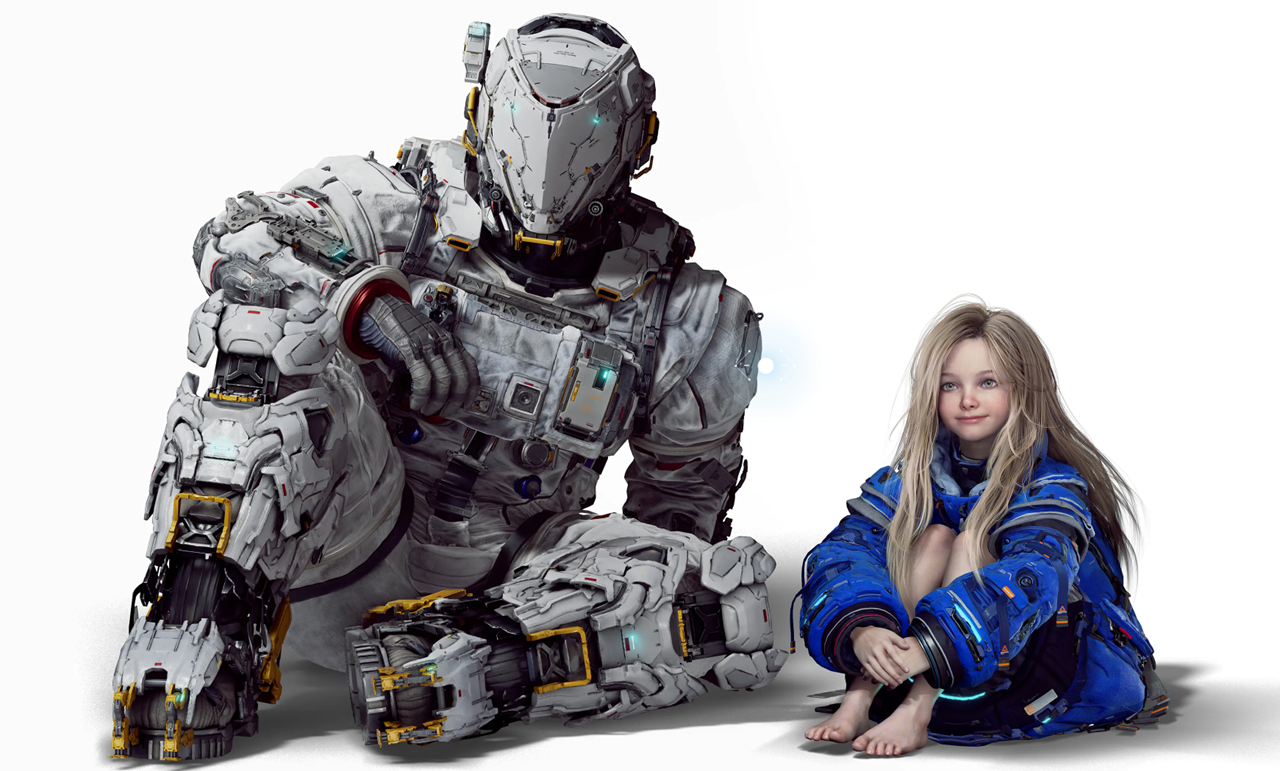
Hugh Williams: The Everyman Hero
In an era of super-soldiers and literal gods, Hugh Williams is a breath of fresh air. He isn’t a marine or a superhero; he’s a simple man doing an extraordinary job. He is an engineer arriving with a team on the moon to investigate an issue, and then BOOM! Things get crazy. This groundedness makes his relationship with Diana feel earned. Their bond is wholesome, building slowly through small interactions as the story develops until it eventually becomes a real tearjerker (no spoilers). Seeing a “regular guy” protect a mysterious girl robot android lifeform like Diana reminded me of the dynamic between Sekiro and Kuro a protector bound by duty but fueled by something much more human.
A Masterclass in Gaming Level Design
Open-world games seem to get all the praise these days, but Pragmata reminded me why I love contained, linear experiences. The world is tightly connected and expertly hand-crafted. There’s a deliberate feel to every corridor and chamber (like Metroid Dread) that you just don’t get in sprawling, procedurally generated maps.
The pacing here is impeccable. Much like my experience with Monster Hunter Stories 3, the game doesn’t overwhelm you at the start. Instead, it slowly fleshes out its systems—weapons, lore, music, and even your base or “Shelter”, at a rate that keeps you hooked without feeling like you’re “ticking boxes.” Most of the lore is tucked away in notes and recordings, rewarding those who take the time to look around, although admittedly I wish the story was told using more cinematics, but the spectacle of that final boss fight made up for it a little.
While the story and gameplay might not be “revolutionary” in a technical sense, they don’t need to be. The execution is what matters. The hacking mechanic involving Diana adds a layer of depth that kept the combat from feeling repetitive. Pro-tip: Use the overdrive ability often! It’s the key to mastering the game’s rhythm.
The “Responsible Gamer” Verdict
As someone who balances gaming with work and life responsibilities, I really appreciated how Pragmata respects the player’s time. The “return to shelter” mechanic makes it easy to jump in for a session, make progress, and jump out without feeling lost. Technically, the game is a dream on PC. It runs incredibly well, featuring a wide array of settings and toggles that allow you to tune the experience to your hardware, in my case a very averagely specced gaming laptop.
Pragmata: Final(ish) Thoughts
Pragmata pulls inspiration from many places: the atmosphere and corporate greed of Aliens, the “parental” journey of The Mandalorian and Grogu, the precision of 2D Metroid and the fantastical nature of Guardian of the Sacred Spirit. But at its heart, it is a story about a man and a little girl against the world (or the moon?). If you appreciate well-designed, linear adventures with a lot of heart, Pragmata is a journey worth taking. Find me unlocking all the things in Pragmata and other games while streaming on Twitch @Jamaiplays.
Sold! Now I just need to play it myself so we can talk about it without worrying about spoilers. I’ll have to dive into the Lone Wolf and Cub reference a bit more. I’ve only just heard of it before, but know very little. Cheers!